Shani Levni: Weaving History, Culture, and Identity Through Art
Shani Levni is an artist whose work feels like a conversation between past and present, tradition and modernity, identity and expression. Through her art, she invites us into a world where history is not frozen in textbooks but alive, breathing through color, texture, and form. In a time when contemporary art can sometimes feel detached or impersonal, Levni’s creations ground us in something deeply human and timeless.
Who Is Shani Levni?
Shani Levni is more than just a painter or visual artist. She is a storyteller, a cultural commentator, and an explorer of identity. Her work reflects a profound awareness of history, not as a distant record but as a living influence on contemporary life. Each composition, whether a painting, a mixed-media piece, or a textured installation, serves as a bridge connecting personal experience with shared cultural narratives.
Her journey into art was not linear, and that diversity of experience is reflected in her work. She draws inspiration from a wide array of sources—traditional crafts, historical motifs, local myths, and the textures of urban life. By blending these elements, Levni creates compositions that feel simultaneously familiar and entirely new.
The Artistic Philosophy of Shani Levni
At the heart of Levni’s approach is the belief that art is a medium for connection. She uses color, form, and material not only to express emotion but also to engage viewers in a dialogue. For Levni, art is never a solitary pursuit; it is a shared experience. Every brushstroke, every layered texture is intended to spark curiosity, reflection, and conversation.
Levni’s work often explores themes of identity. In a globalized world, the question of who we are—culturally, historically, personally—can feel complex and fragmented. Her art seeks to simplify this complexity by presenting identity as a living, breathing entity, one that is constantly shaped by history, memory, and community.
Blending History and Modernity
One of the most striking aspects of Shani Levni’s art is her ability to fuse historical motifs with contemporary aesthetics. She does not recreate the past as a museum curator might. Instead, she reinterprets it, layering traditional patterns, cultural symbols, and historical references into modern compositions that speak to today’s viewers.
For example, in some of her textured pieces, we see references to classical architectural forms, ancient textiles, and symbolic iconography, all reimagined through modern materials and abstract forms. The effect is both nostalgic and forward-looking, inviting viewers to reflect on how history continues to shape contemporary culture.
The Role of Texture in Levni’s Work
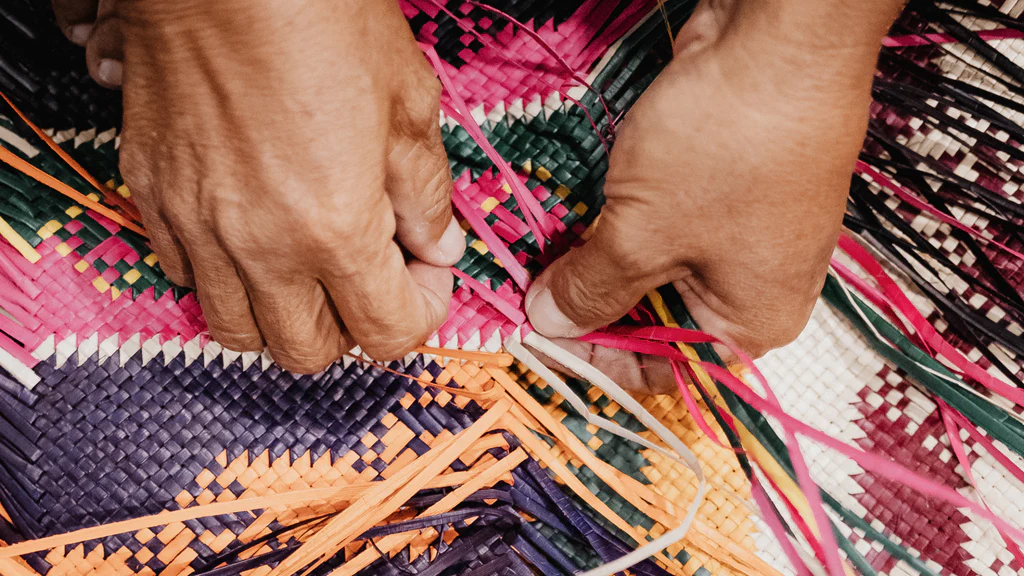
Texture is a defining feature of Levni’s art. Her canvases are not flat surfaces but landscapes of layered color, material, and technique. She often experiments with mixed media—combining paint with fabric, paper, and natural materials—to create depth and tactility. This approach makes her work almost sculptural, encouraging viewers to engage with it not just visually but physically.
Texture in Levni’s work is not only aesthetic; it is symbolic. The layers represent the complexity of human experience—the way memories, histories, and identities build upon one another to create the whole person. By inviting viewers to explore these layers, Levni encourages a deeper understanding of both art and self.
Cultural Influences and Inspirations
Shani Levni draws inspiration from a wide range of cultural sources. Her work often reflects the visual language of her heritage, incorporating motifs and symbols that resonate with her personal background. But she also looks beyond her immediate cultural context, drawing inspiration from global artistic traditions.
This cross-cultural dialogue is evident in the way she blends styles and techniques. We might see the influence of Middle Eastern calligraphy, European modernism, African textile patterns, and indigenous craft traditions—all coexisting harmoniously in a single piece. This approach highlights Levni’s belief that culture is not static but dynamic, constantly evolving through interaction and exchange.
The Power of Color
Color is another essential element of Levni’s artistic vocabulary. Her palette is often bold and vibrant, with contrasting hues that create energy and movement. Yet she also knows when to use restraint, employing muted tones to evoke introspection and subtlety.
In her work, color is never arbitrary. Each choice serves a purpose, whether to convey emotion, reference a cultural motif, or guide the viewer’s eye through a composition. The interplay of color and texture in Levni’s work is particularly striking, creating pieces that feel alive, almost as if they are breathing.
Storytelling Through Art
Perhaps the most compelling aspect of Shani Levni’s work is its storytelling quality. Every piece tells a story, whether about history, culture, identity, or personal experience. But these stories are never didactic; they are open-ended, inviting viewers to bring their own interpretations and emotions to the work.
In some series, Levni explores historical events and their lasting impact on collective memory. In others, she focuses on intimate personal narratives, using abstract forms and symbolic motifs to convey feelings and experiences that might otherwise be difficult to articulate. The result is art that resonates on multiple levels, appealing to both intellect and emotion.
Exhibitions and Recognition
Levni’s work has been exhibited in galleries and cultural spaces around the world, attracting attention for its originality and depth. Critics and audiences alike have praised her ability to combine aesthetic beauty with intellectual and emotional richness.
Her exhibitions are often immersive experiences, allowing viewers to move through space and engage with her work from different perspectives. This sense of immersion aligns with her belief that art should be an experience, not just a visual object.
Impact on Contemporary Art
Shani Levni is part of a broader movement in contemporary art that seeks to reconnect art with cultural and historical context. In a world where much contemporary work can feel disconnected or overly conceptual, Levni’s art reminds us that creativity is most powerful when it is rooted in lived experience and shared history.
Her work also challenges conventional boundaries between art forms. By blending painting, sculpture, textiles, and installation, she encourages viewers to think differently about what art can be. In doing so, Levni is helping to redefine the possibilities of contemporary artistic expression.
Why Shani Levni Matters
In today’s fast-paced world, where images and ideas move rapidly and often superficially, Shani Levni’s work offers depth and reflection. Her art encourages us to slow down, to explore layers of meaning, and to consider the interplay between history, culture, and identity.
Levni matters not only because of her technical skill or aesthetic sensibility but because of the way she makes art a vehicle for understanding ourselves and our world. She demonstrates that art is not just about what we see—it is about what we feel, remember, and imagine.
How to Experience Levni’s Art
Experiencing Shani Levni’s work is best done in person, where the textures, colors, and scale of her pieces can be fully appreciated. However, digital exhibitions and high-quality reproductions also offer a glimpse into her artistic vision.
For those interested in exploring her work more deeply, consider looking at thematic series rather than individual pieces. Levni often develops ideas over multiple works, creating a narrative or visual dialogue that unfolds across a collection. Engaging with her art in this way allows for a richer and more nuanced understanding.
Final Thoughts
Shani Levni represents a bridge between past and present, tradition and innovation, personal and collective experience. Her work reminds us that art is not just decoration or entertainment—it is a way of understanding our world, our history, and ourselves.
Through her textured compositions, vibrant colors, and deeply considered forms, Levni challenges us to think, feel, and connect. She is not only reshaping contemporary art; she is expanding the ways in which we experience culture, memory, and identity.
We see in her work a profound respect for history, a fearless embrace of experimentation, and a dedication to storytelling that is both personal and universal. In engaging with Shani Levni’s art, we are invited into a dialogue that is as much about our own experiences as it is about hers, making every encounter a meaningful and transformative one.